

The Natural History Museum is proud to announce the 2026–2028 cohort of Red Natural History Fellows.
As far-right groups within and beyond government continue their assault on the institutions and tools we rely on to investigate and challenge power, these seven scholar-activists, researchers, writers, and organizers are redefining natural history as a terrain of struggle: shaped by extraction, colonialism, militarism, and nation-building—and by the movements that have risen to disrupt them.
About the Fellowship
The Red Natural History Fellowship is a two-year program that provides Fellows with resources, production and communications support, and a collaborative intellectual home to develop ambitious, movement-engaged work.
Created to incubate and amplify public scholarship and field-building (or field-pushing) initiatives, the program aims to advance a vision and practice of natural history for a world in crisis: one that confronts the systems that reproduce colonial and ecological harm, supports communities leading struggles for justice, and honors life in all its forms—past, present, and future.
The 2026-2028 Cohort
Selected through an open call from more than 100 applications spanning six continents, the 2026–2028 cohort brings together Fellows working across food justice, environmental sociology, political geography, Indigenous sovereignty, climate justice, and research on dirty energy infrastructure, AI and data centers, and the entanglements of ecology, extraction, and militarism.
Together, the Fellows bring diverse methodologies and lived experiences to bear on the ecological and social crises shaping the present moment. Their work draws on deep experience in dissident research, counter-mapping, political education, agroecology, community organizing, activist institution-building, and international advocacy.
The 2026–2028 cohort joins a growing community of practice that includes the inaugural cohort—now our Red Natural History Fellows Emerita. Their work will be shared over the next two years through public events, community-engaged collaborative research, and online publishing and media projects.
Meet the 2026–2028 Red Natural History Fellows
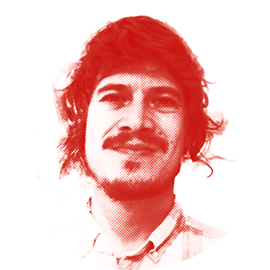 |
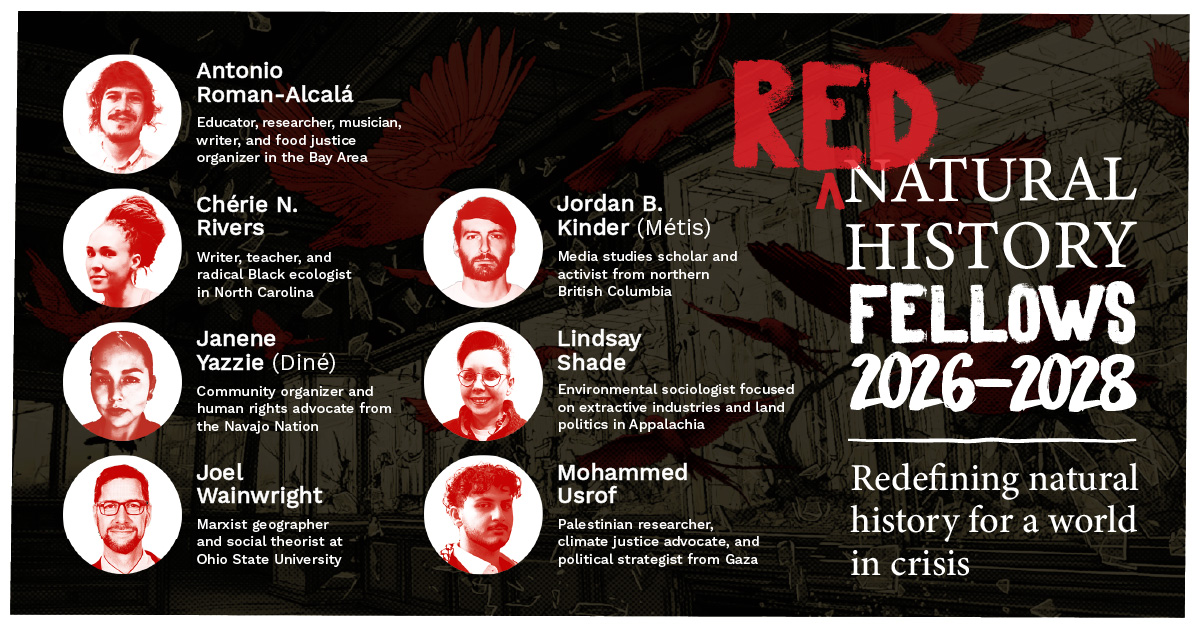
Antonio Roman-Alcalá is an educator, researcher, writer, musician, and organizer based in Berkeley, California who has worked on issues of sustainable food systems for over 20 years. An Assistant Professor of Geography and Environmental Studies at California State University East Bay, Roman-Alcalá also conducts research with the UC-based California Organic, Agroecological, and Regenerative (COAR) Transitions Initiative. He co-facilitates the scholar collaborative Agroecology Research-Action Collective (ARC) and monthly political education gatherings known as Radical Agroecology Dinner and Discussion (RADD). Previously, he co-founded San Francisco’s Alemany Farm, the San Francisco Urban Agriculture Alliance, and the California Food Policy Council, and produced the documentary film In Search of Good Food in 2010. His first book, North Stars of Emancipation: California’s Diverse Food and Farming Movements in Times of Racial Reckoning, is forthcoming from the MIT Press. |
 |
Chérie N. Rivers is a writer, teacher, and radical Black ecologist whose work stems from a commitment to interrupting modern colonialism with the transformative power of imagination. She is founder and co-director of Dandelions’, an educational biodynamic farm and earth-based school, and the author of award-winning books including To Be Nsala’s Daughter: Decomposing the Colonial Gaze (2023), Necessary Noise: Music, Film, and Charitable Imperialism in the East of Congo (2016), and the edited volume The Art of Emergency: Aesthetics and Aid in African Crises (2020). As a professor of Geography at UNC Chapel Hill, Rivers teaches courses on Liberation Geographies, Agroecology and Ecoliteracy, Freedom Farming, and Beyond Sustainability. She served for 12 years as Director of Education at Yole!Africa, an Indigenous-run cultural and educational center in the Democratic Republic of the Congo. |
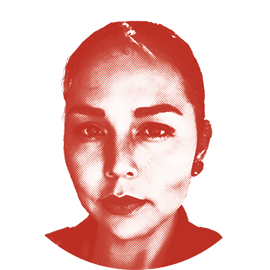 |
Janene Yazzie (Diné) is an internationally known Indigenous Rights and human rights advocate, and a longtime community organizer from the Navajo Nation. She is the Director of Global Programmes for The Woven Project. With a background in International Politics and Human Rights she has 19 years of experience working on the intersections of Indigenous Peoples’ Rights, Climate Change, Water Sovereignty, Food Sovereignty, Sustainable Development, Renewable Energy, and protection of Human Rights defenders. She is currently the North America (United States and Canada) representative to the Facilitative Working Group (FWG) of the Local Communities and Indigenous Peoples Platform (LCIPP), a constituted body of the United Nations Framework Convention on Climate Change (UNFCCC). She also serves as the co-chair of the FWG. She currently works as a consultant on Indigenous Peoples’ Rights with a focus on food systems sovereignty and developing political education tools addressing the nexus of Climate Change, Militarism, AI, and Indigenous Peoples’ Rights. |
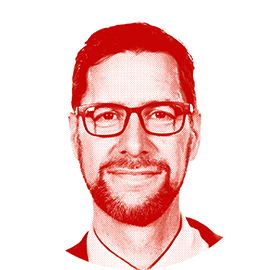 |
Joel Wainwright is a Professor in the Department of Geography at Ohio State University, where he teaches about political economy, environmental change, and social theory. His most recent book, The End: Marx, Darwin, and the Natural History of the Climate Crisis (2025) traces the influence of Charles Darwin on Karl Marx’s thought, excavating a Marxian tradition of natural history that can orient a collective response to the planetary crisis of climate change. His books include Climate Leviathan (with Geoff Mann, 2018), Decolonizing Development (2008), Geopiracy (2012), and the co-edited volume Rethinking Israel/Palestine: Marxist Perspectives (2019). |
 |
Jordan B. Kinder (Métis) is an Assistant Professor in the Department of Media, Culture, and Communication at New York University, where he researches and teaches on the cultural politics of energy, media, infrastructure, and environment across the fields of materialist media and communication studies, the energy and environmental humanities, and critical Indigenous studies. His first sole-authored book, Petroturfing: Refining Canadian Oil through Social Media (2024), critically examines how the pro-oil movement in Canada took shape on social media throughout the 2010s in the setting of a handful of proposed, highly contested oil sands pipeline projects. He is currently working on a historical, archive-driven monograph on the media and mediations of the Mackenzie Valley Pipeline proposals and inquiry of the 1970s. Kinder grew up in northern British Columbia, Canada and is a citizen of the Otipemisiwak Métis Government (Métis Nation of Alberta). |
 |
Lindsay Shade is an environmental sociologist with a focus on extractive industries, environmental justice, land politics, and public revenues. Their work draws from popular education traditions to engage grassroots stakeholders in southern Appalachia and northern Ecuador to address community problems related to land. They engage with critical legal studies, decolonial and queer theory, and political economy, and contribute to efforts to transition from extractive to regenerative economies, especially in those areas hardest hit by extraction. Shade also has a background in human geography and utilizes geospatial analysis to visualize land ownership inequality, promote land return with the Appalachian Rekindling Project, and track and resist carceral expansion in Appalachia with the Building Community Not Prisons coalition. Since 2016, they have helped to build the Appalachian Land Study collective, which links together diverse land justice struggles to study and transform land ownership while building up movement infrastructure. |
 |
Mohammed Usrof is a Palestinian researcher and organiser working on the political economy of energy, climate violence, and decolonial environmental thought. He is the Founder and Executive Director of the Palestinian Institute for Climate Strategy, a Palestinian-led research and advocacy organisation advancing analysis on energy systems, militarism, and uneven development under occupation. His work examines how infrastructures such as fuel supply chains, grids, ports, and extractive industries function as technologies of power, shaping vulnerability, displacement, and resistance in Palestine and the wider Middle East. He has contributed to research and policy work with Palestinian civil society organisations, international NGOs, and global climate governance processes, including work on military emissions, fossil fuel accountability, and just transition debates. Across his research and organising, Usrof bridges political-economic analysis with movement strategy, challenging technocratic climate solutions and centring justice, repair, and material accountability in contexts of war and ecological crisis. His advocacy is mostly notable in global climate justice fora and UN climate processes. |
With Appreciation
The Red Natural History Fellows Program is made possible with support from the Henry Luce Foundation, 4Culture, and many individual donors.
We’re grateful for everyone who helps sustain this work—if you’d like to be part of it, you can donate here: TheNaturalHistoryMuseum.org/donate.