


Wednesday, April 15, 2026 — 1 pm ET / 3pm PT
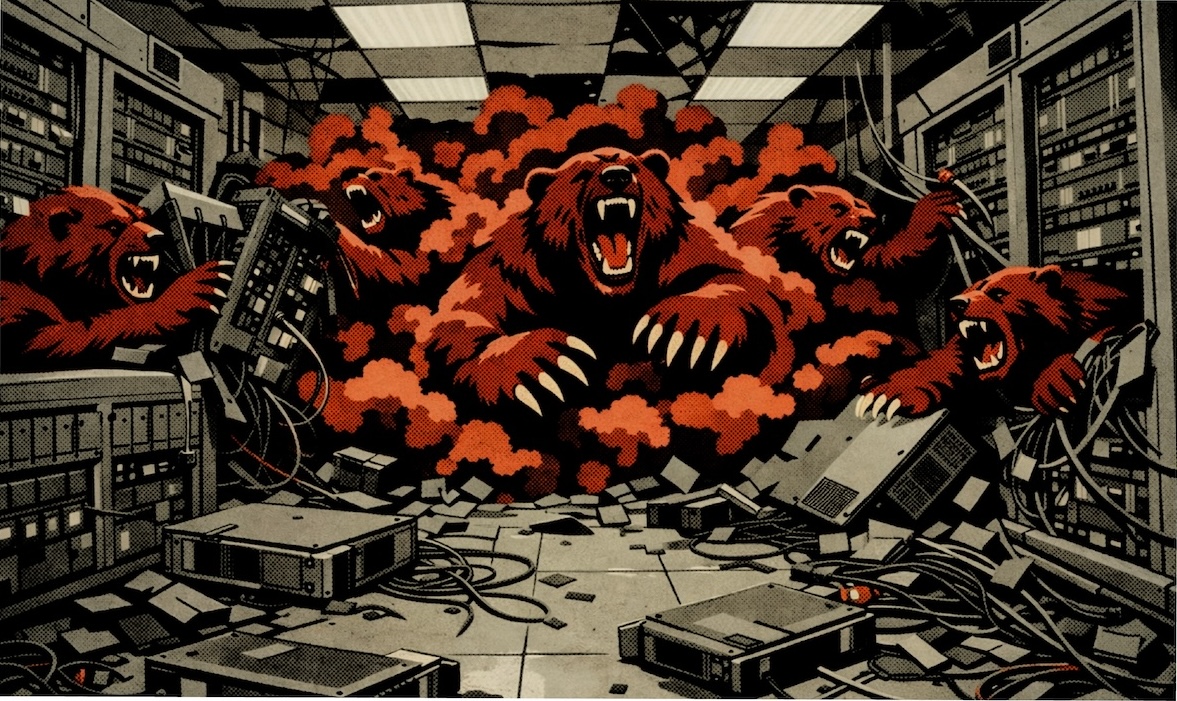
The ‘cloud’ has always been a lie. There is nothing immaterial about the infrastructure powering the AI economy. Data centers are vast industrial facilities that consume enormous amounts of water and energy, requiring new mines, new pipelines, and new sacrifice zones. The communities living closest to this infrastructure bear the costs, while Big Tech reaps record profits. This story is as old as colonization itself: extraction and enclosure dressed up as progress.
This virtual roundtable brings together Indigenous land defenders, scholar-activists, and grassroots organizers to examine how the rapid expansion of cloud and AI infrastructure is driving new waves of fossil fuel dependence, mineral extraction, land dispossession, and environmental injustice. Far from the immaterial “cloud” promised by Silicon Valley, data centers are vast, resource-intensive industrial facilities whose growth is reshaping landscapes, energy systems, and political struggles across North America.
Drawing lessons from Indigenous-led fights against pipelines, mining projects, and other forms of extractive infrastructure—as well as successful campaigns to block data centers—speakers will share insights from the frontlines of the data center frontier and explore how movements across sites and issues can build durable solidarities in the face of a rapidly expanding digital-industrial regime.
SPEAKERS
 Jordan B. Kinder (Métis) is a 2026-28 Red Natural History Fellow with The Natural History Museum and an Assistant Professor in the Department of Media, Culture, and Communication at New York University, where he researches and teaches on the cultural politics of energy, media, infrastructure, and environment across the fields of materialist media and communication studies, the energy and environmental humanities, and critical Indigenous studies. His first sole-authored book, Petroturfing: Refining Canadian Oil through Social Media (2024), critically examines how the pro-oil movement in Canada took shape on social media throughout the 2010s in the setting of a handful of proposed, highly contested oil sands pipeline projects. Kinder grew up in northern British Columbia, Canada and is a citizen of the Otipemisiwak Métis Government (Métis Nation of Alberta).
Krystal Two Bulls Krystal Two Bulls (Oglala Lakota/Cheyenne) is the Executive Director of Honor the Earth. Hailing from Lame Deer, Montana, Krystal is Oglala Lakota and Northern Cheyenne. With extensive experience as an organizer, she has worked on local, national, and transnational campaigns for social, racial, and environmental justice. Her identity as a Native American veteran deeply informs her organizing and storytelling. Krystal’s work focuses on the connections between collective wellness, environmental justice, Indigenous Peoples’ Rights, and anti-militarism. Through healing from her soldier experiences, she embodies a warrior’s commitment to the well-being of all Peoples and their relationship to the land.

Thea Riofrancos is an Associate Professor of Political Science at Providence College, a Strategic Co-Director of the Climate and Community Institute, and a fellow at the Transnational Institute. Her research focuses on resource extraction, climate change, the energy transition, the global lithium sector, green technologies, social movements, and the Latin American left. Her most recent book, Extraction: The Frontiers of Green Capitalism (2025), is an in-depth analysis into the growing industry of green technologies and the environmental, social, and political consequences of the mining it requires.

Vivek Bharathan is based in Tucson, Arizona, where he has been organizing since June 2025 with the No Desert Data Center Coalition to stop the development of the massive, water-intensive Amazon data center known as Project Blue. In addition to supporting local organizing efforts, he has created digital assets and shaped public communications for the coalition. A technologist by trade, Vivek has worked as a software engineer, web developer, and IT manager. As a Data Center Fellow with MediaJustice, he continues supporting the local site fights in southern Arizona as well as MediaJustice’s ongoing support for communities fighting hyperscale data centers everywhere. award.
This event is part of a new virtual event series curated by The Natural History Museum with the 2026-2028 cohort of Red Natural History Fellows. Made possible with support from the Henry Luce Foundation and 4Culture.