

Wednesday, September 30 | 12 pm ET / 9 am PT

Please note: this event will not be recorded.
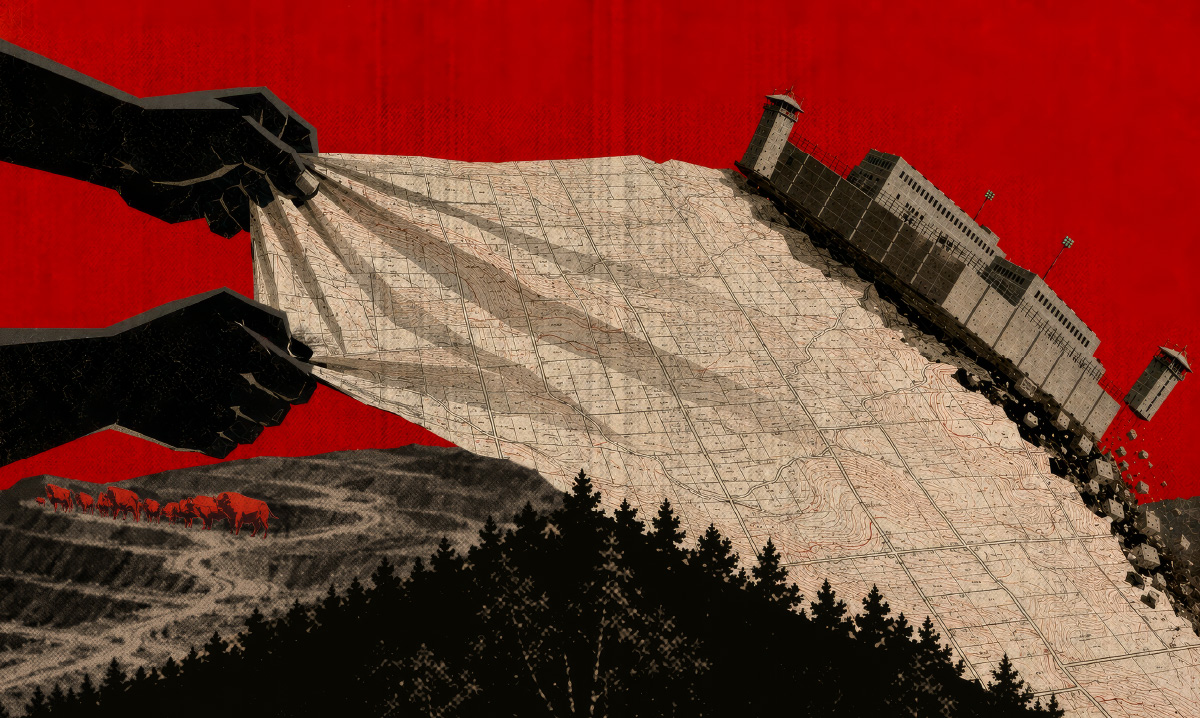
Central Appalachia has been a key site of the extractive economy for two centuries. In recent decades, landscapes reshaped and abandoned by the coal industry have been repurposed for prisons and, now, AI data centers.
How did this region become a target for repeated cycles of extraction and abandonment? How are communities using land ownership data not only to stop new extractive developments before they take hold, but also to break with the property regime that underpins them? And what can these struggles teach us about resisting extractivism elsewhere?
This roundtable conversation will explore how histories of dispossession and unequal land ownership shape what gets built, where, and for whose benefit. Featuring scholar-activists, lawyers, prison abolitionists, and environmental justice organizers with decades of experience in Central Appalachia and across the United States, speakers will confront the role of land ownership systems in perpetuating extractivism—asking how understanding property relations can strengthen our collective efforts to both resist new developments and build reparative futures in Appalachia and beyond.
SPEAKERS
 Tiffany Joy (Pyette) is the founder and co-executive director of the Appalachian Rekindling Project, an Indigenous, women-led initiative based in central Appalachia (southeast Kentucky, southwest Virginia, and West Virginia) dedicated to ecological restoration, Indigenous land rematriation, and cultural revitalization.
 Sharon Fisher is president of The Clinch Coalition, which fights for environmental justice in southwest Virginia. She is also a leader of SWVA Watch, a grassroots movement opposing data centers and harmful energy developments such as nuclear, natural gas, and blue hydrogen. Originally from West Virginia, Sharon’s family includes five generations of coal miners.
 Mary Cromer is an environmental lawyer and Deputy Director of Appalachian Citizens’ Law Center, Inc. (Kentucky) and resident of Wise County, Virginia, where her family has farmed since the 1840s. Her community-based environmental law work has focused on environmental justice issues from toxic waste, to clean drinking water, to landowner rights issues, and more.
 Lindsay Shade is an environmental sociologist, Red Natural History fellow, convenor and co-founder of the Appalachian Land Study Collective, and creator of OpenLand, a people’s land records observatory.

Ruth Wilson Gilmore is Professor of Earth and Environmental Sciences, American Studies, and Africana Studies at the City University of New York Graduate Center. Co-founder of many grassroots organizations including California Prison Moratorium Project, Critical Resistance, and Central California Environmental Justice Network, Ruthie wrote Abolition Geography: Essays Towards Liberation (2022), and Golden Gulag: Prisons, Surplus, Crisis, and Opposition in Globalizing California (2007). Recent publications include an Introduction to Lenin’s Imperialism and the National Question (2024), and forewords to Making the World Clean by Françoise Vergès (2025), and Making Death and Life in Palestine, Tithi Bhattacharya and Sue Ferguson, editors (2025). Photo Credit: ©AmaalSaid
***
This event is part of Natural History From the Other Side, an event series curated by the 2026–2028 cohort of Red Natural History Fellows with The Natural History Museum. Made possible with support from the Henry Luce Foundation and 4Culture.