

Friday, October 9, 2026 | 2 pm ET / 11 am PT

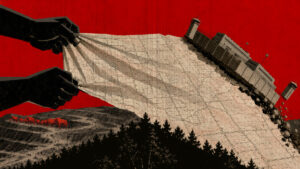
The Black Hills—He Sapa in Lakota—are a sacred homeland of the Oceti Sakowin, often called the Great Sioux Nation. The 1868 Fort Laramie Treaty guaranteed the Hills to the Oceti Sakowin, but after gold was discovered, the United States illegally seized the land, opened it to mining, and later carved the faces of four American presidents into what has become its most famous cliff.
What does it mean to call this place He Sapa? What’s at stake in the intergenerational struggle to protect it from mining and mineral exploration? And how can public art intervene in a tourism landscape visited by millions each year—one shaped by settler-colonial names, monuments, and narratives that obscure He Sapa’s spiritual and cultural significance, treaty history, unresolved land claim, and present-day threats?
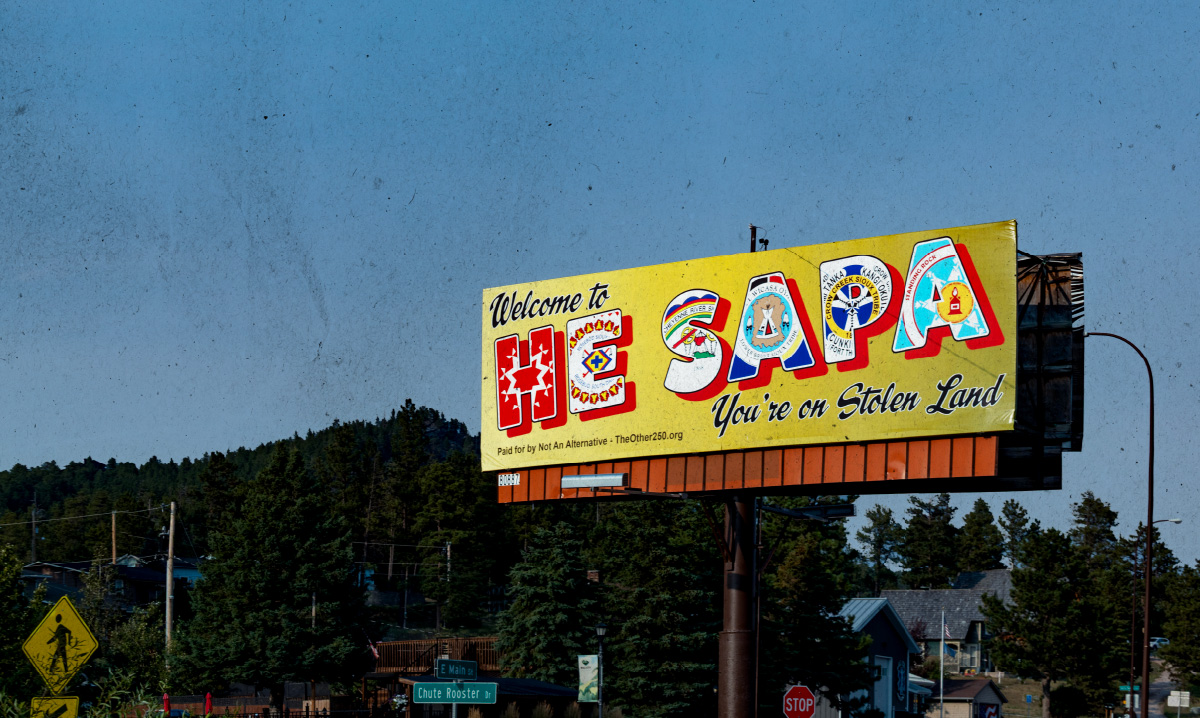
Held in conjunction with the billboard campaign “Welcome to He Sapa. You’re on Stolen Land,” this roundtable brings together Lakota artists, activists, and knowledge-holders, situating present-day struggles over mining within generations of Indigenous-led resistance to extraction and dispossession in He Sapa.
The conversation will explore how art, organizing, direct action, and intergenerational knowledge have carried histories of resistance into the present, shaping the ongoing struggle to reclaim, protect, and steward the land for future generations.
SPEAKERS
Madonna Thunder Hawk (Oohenumpa Lakota) is a lifelong organizer from the Cheyenne River Reservation with six decades of experience in struggles for Indigenous sovereignty, environmental justice, and cultural reclamation. A leader in the American Indian Movement, she participated in the occupations of Alcatraz, Mount Rushmore, and Wounded Knee, and later in the NoDAPL movement at Standing Rock. She co-founded the We Will Remember Survival School, Women of All Red Nations, the anti-uranium Black Hills Alliance, and the Warrior Women Project. She continues grassroots work through Waš’ágiya Nájiŋ, a grandmothers’ group working to restore Lakota kinship networks.
Marty Two Bulls Jr. (Oglala Lakota) is an interdisciplinary artist, educator, and curator based in Rapid City, South Dakota. His practice spans sculpture, printmaking, ceramics, illustration, graphic design, and public art. He is an inaugural Artist Laureate for the Oglala Sioux Tribe and a United States Artists Fellow, and helped create an Oglala Lakota Winter Count. In 2017, he returned to South Dakota to teach at Oglala Lakota College, where he created the Graphic Arts program. He later earned an MFA from Bard College. His work has been exhibited nationally and internationally and is held in museum collections. Two Bulls designed the artwork for the “Welcome to He Sapa. You’re on Stolen Land” billboard campaign.
Taylor Gunhammer (Oglala Lakota) is a writer, artist, and community organizer whose work centers Indigenous sovereignty, land defense, and protecting He Sapa from mining and extractive harms. He is a contributor to The Other 250, a counter-atlas of place names and living struggles within The Natural History Museum’s Words Are Monuments project. His essay on He Sapa explores the land’s spiritual significance, treaty history, ongoing mining threats, and Indigenous stewardship; the campaign billboards direct viewers to the essay. Gunhammer previously served as lead organizer for NDN Collective’s Protect the He Sapa campaign and serves on the board of the Black Hills Clean Water Alliance.
This is a Words Are Monuments event produced by The Natural History Museum. Made possible with support from the Mellon Foundation and 4Culture.