


Tuesday, May 19 | 12pm ET / 9am PT
Is the UN climate process at a dead end?
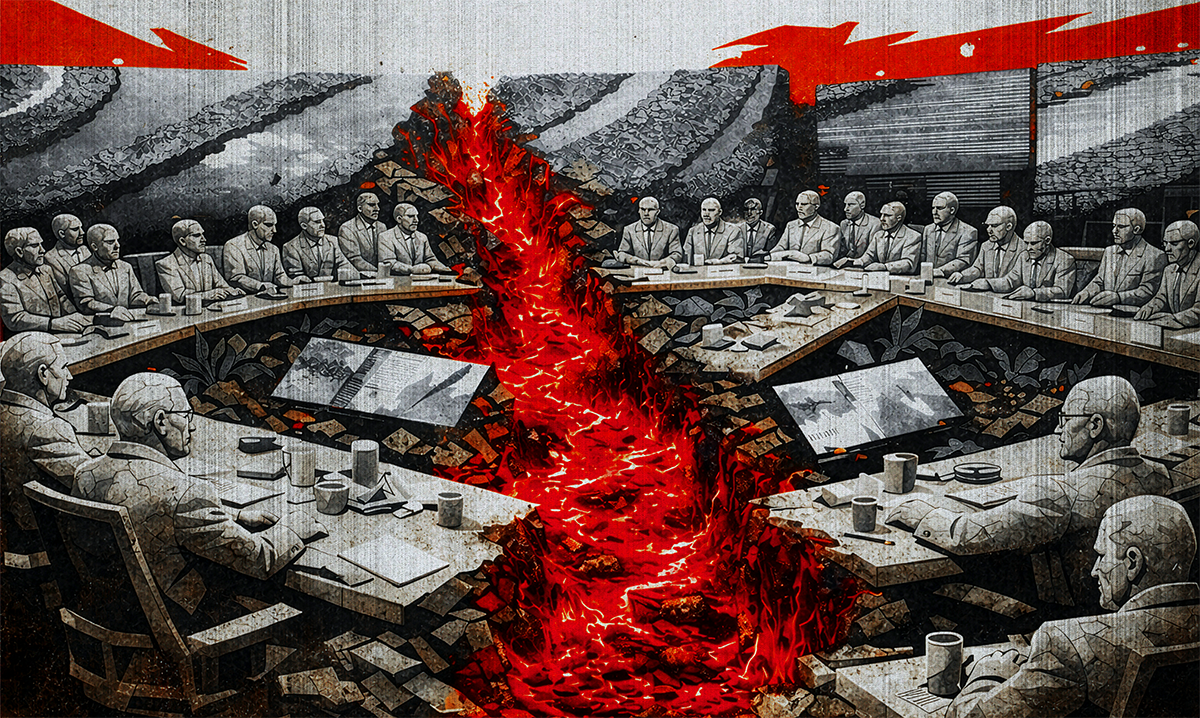
After decades of COP negotiations, global emissions continue to rise and ecosystems are in rapid decline. Oil wars are surging—including wars in which fossil fuel supply chains are actively sustaining what the UN Independent International Commission of Inquiry has found to be genocide in Gaza. Gridlocked by consensus rules, a few elite nations and powerful transnational corporations have effectively hijacked the process, dimming the prospect for a just transition from fossil fuels.
In April, 2026, ministers from 59 countries gathered alongside civil society stakeholders in Santa Marta, Colombia for the First Conference on Transitioning Away from Fossil Fuels—sidestepping the stalled UN framework in an attempt to rewrite the rules. The conference produced a declaration, principles, and a roadmap committing signatories to production phase-out timelines and supply-side measures—a significant departure from the demand-side focus that has dominated UNFCCC negotiations.
But the gap between diplomatic ambition and substantive accountability for the firms that extract and transport fossil fuels remained largely unaddressed. Excluding major emitters like the United States, this “coalition of the willing”—which represents roughly 30% of the global fossil fuel market—points toward a new model of climate diplomacy—though one whose internal contradictions around representation, justice, and accountability to Indigenous Peoples and frontline communities remain unresolved.
This virtual roundtable brings together three Red Natural History Fellows who were on the ground in Santa Marta. What actually happened behind closed doors—and what happened in the streets? What was put on the table, and what was left out? How did Indigenous Peoples and civil society groups intervene? What new openings and pressure points are emerging? And if this coalition is serious about breaking the fossil fuel system rather than managing it—what would that actually require?
Speakers
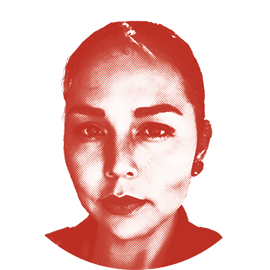
Janene Yazzie (Diné) is an internationally known Indigenous Peoples’ Rights and human rights advocate, and a longtime community organizer from the Navajo Nation. She is the Director of Global Programmes for The Woven Project. She is also the North America (United States and Canada) representative to the Facilitative Working Group (FWG) of the Local Communities and Indigenous Peoples Platform (LCIPP), a constituted body of the United Nations Framework Convention on Climate Change (UNFCCC), and she also serves as the co-chair of the FWG. She currently works as a consultant on Indigenous Peoples’ Rights with a focus on food systems sovereignty and developing political education tools addressing the nexus of Climate Change, Militarism, AI, and Indigenous Peoples’ Rights.

Mohammed Usrof is a Palestinian researcher and organizer working on the political economy of energy, climate violence, and decolonial environmental thought. He is the Founder and Executive Director of the Palestinian Institute for Climate Strategy, a Palestinian-led research and advocacy organization advancing analysis on energy systems, militarism, and uneven development under occupation. His work examines how infrastructures such as fuel supply chains, grids, ports, and extractive industries function as technologies of power, shaping vulnerability, displacement, and resistance in Palestine and the wider Middle East. Across his research and organizing, Usrof bridges political-economic analysis with movement strategy, challenging technocratic climate solutions and centering justice, repair, and material accountability in contexts of war and ecological crisis.

Joel Wainwright is a Professor in the Department of Geography at Ohio State University, where he teaches about political economy, environmental change, and social theory. His most recent book, The End: Marx, Darwin, and the Natural History of the Climate Crisis (2025) traces the influence of Charles Darwin on Karl Marx’s thought, excavating a Marxian tradition of natural history that can orient a collective response to the planetary crisis of climate change. His books include Climate Leviathan (with Geoff Mann, 2018), Decolonizing Development (2008), Geopiracy (2012), and the co-edited volume Rethinking Israel/Palestine: Marxist Perspectives (2019).
Further reading: if you’d like to prepare for the event, you can explore the Palestinian Institute for Climate Strategy’s statements and takeaways from the conference, as well as their call for an energy embargo from below, in solidarity with Cuba, Venezuela, Iran, Lebanon, and Palestine.
____
This event is part of Natural History From the Other Side, an event series curated by the 2026–2028 cohort of Red Natural History Fellows with The Natural History Museum. Made possible with support from the Henry Luce Foundation and 4Culture.